Originally published in The International Journal of Nautical Archaeology, Volume 33, Issue 1 (2004).
Written by Joseph I. Boyce, Eduard G. Reinhardt, Avner Raban, and Matthew R. Pozza.
Abstract
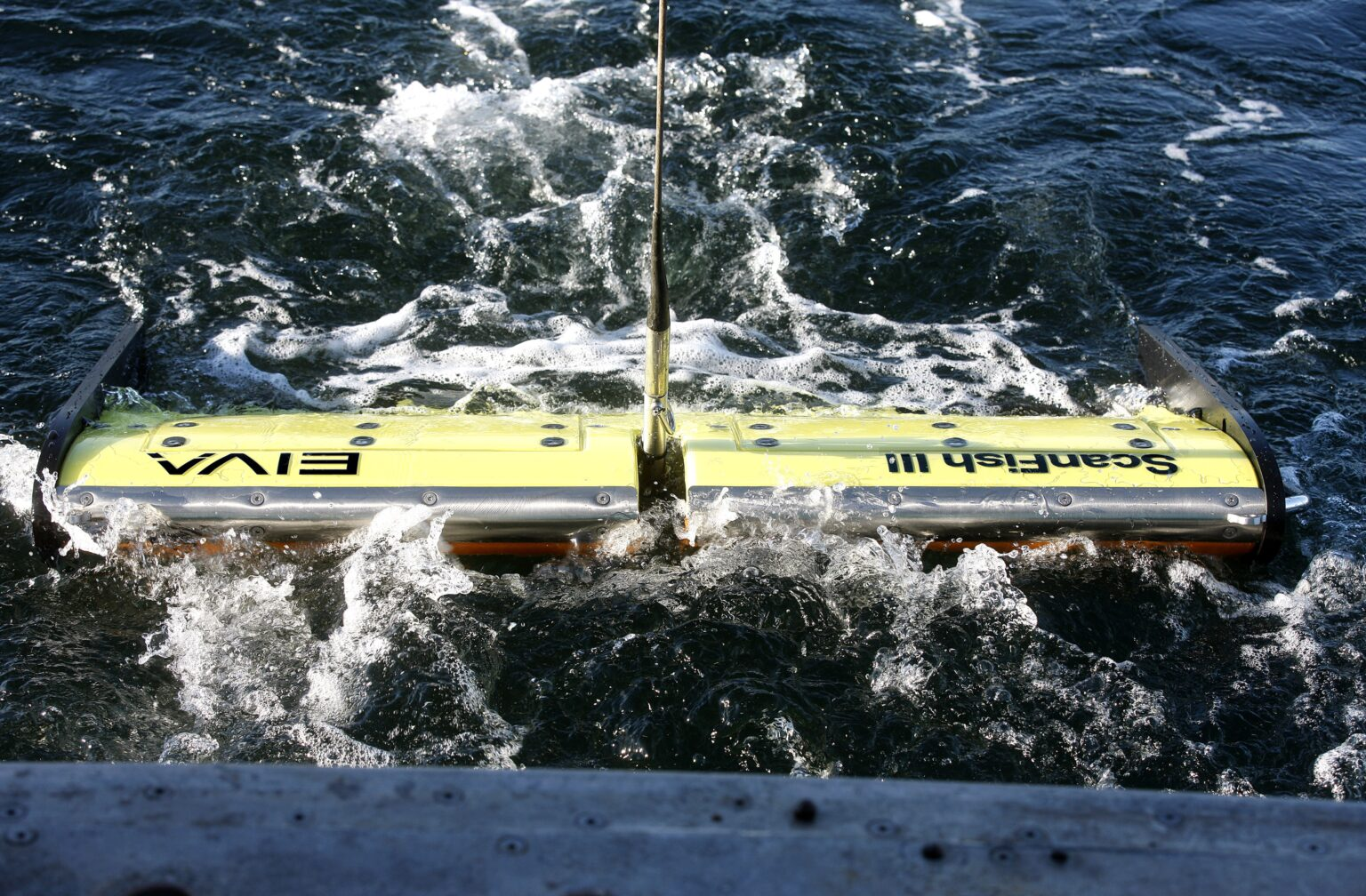
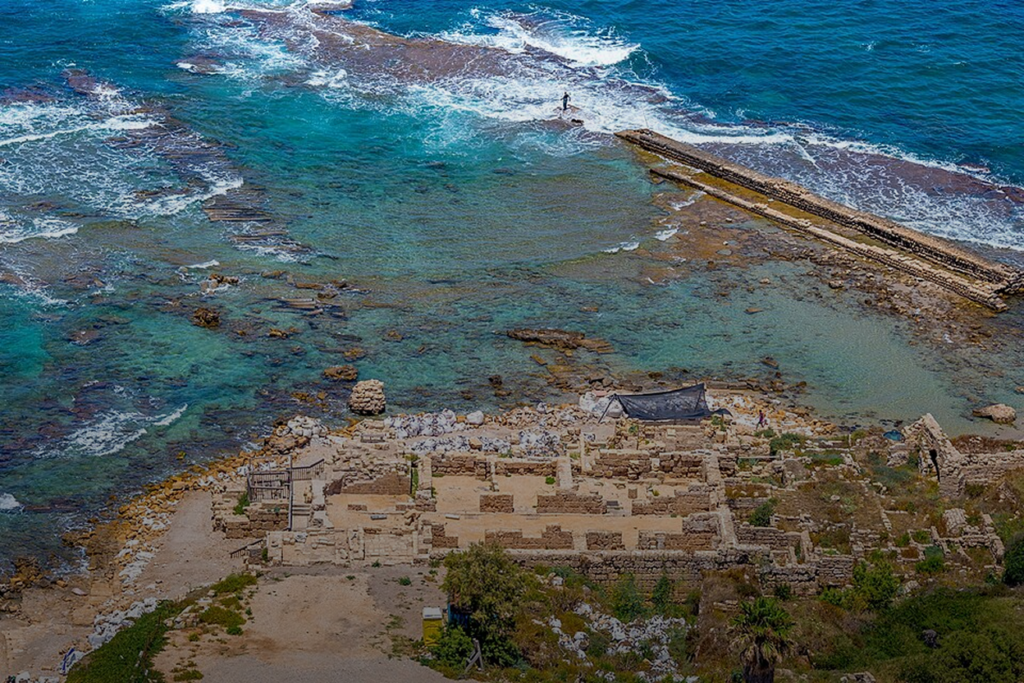
The harbour built by King Herod’s engineers at Caesarea represented a major advance in Roman harbour construction that incorporated the use of large (390 m3 ), form-filled hydraulic concrete blocks to build an extensive foundation for the harbour moles and breakwater barriers. Marine geophysical surveys were recently conducted across the submerged harbour in an attempt to map the configuration of the buried concrete foundation. A total of 107 line km of high-resolution marine magnetic surveys (nominal 15 m line separations) and bathymetry were acquired over a 1 km2 area of the submerged harbour using an Overhauser marine magnetometer, integrated DGPS and single-beam (200 KHz) echosounder. The feasibility of magnetic detection of the concrete was established before the survey by magnetic susceptibility testing of concrete core samples. All concrete samples contained appreciable amounts of fe-oxide-rich volcanic ash (‘pozzolana’) and showed uniformly high susceptibility values (κ > 10-4 cgs) when compared to harbour bottom sediments and building stones (κ < 10-6 cgs).
Magnetic surveys identify a localized increase in magnetic intensity (ca. 3-10 nT) that is attributed to the presence of hydraulic concrete within the buried harbour structure. The mapped anomaly patterns are distinctly rectilinear, indicating that the concrete foundation was laid out in ‘header’ fashion in dominantly N-S and W-E trending segments. Magnetic lows identify ‘cells’ within the concrete framework that were likely backfilled with harbour sediments prior to construction of the harbour moles and quays.
Summary
This study demonstrates the utility of magnetic methods for mapping buried concrete structures in a marine archaeological setting and provides important new insights into the method of construction of Herod’s harbour. Magnetic property testing of hydraulic concrete samples shows that they are characterised by high magnetic susceptibilities and are good targets for magnetic detection. It is anticipated that the methods described here will have wider application to other Roman harbour sites where pozzolan concrete materials were employed.
Magnetic mapping at Sebastos confirms that concrete structures exposed at several locations on the harbour are part of a much more extensive foundation work that underlies the entire mole structure (Fig. 8B). The interpreted magnetic anomaly patterns suggest that the two moles were established by the construction of two large rectangular ‘islets’ with concrete perimeter walls and internal compartments or ‘cells’. The compartments were either actively infilled, or acted as large baffles trapping littoral sediment through the natural processes of longshore drift.